The Mushroom Dispensary
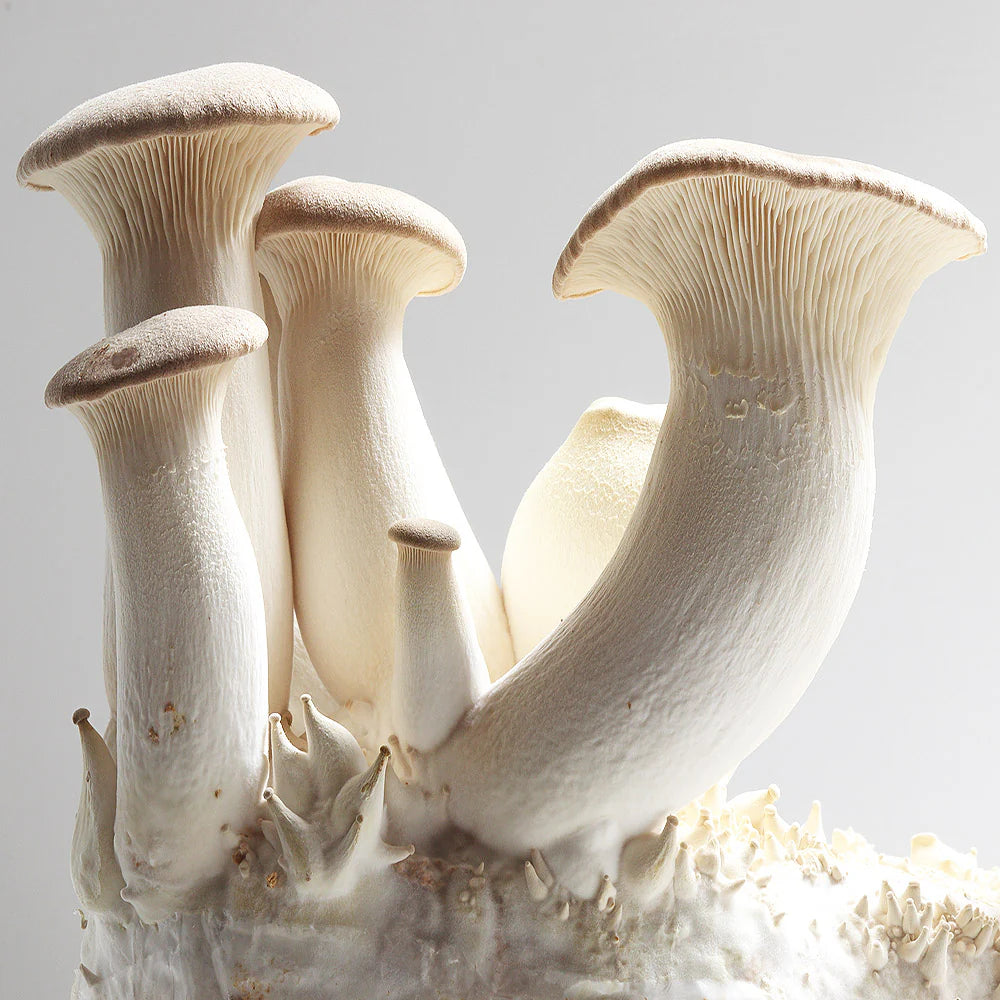
Pleurotus Eryngii - King oyster
Pleurotus Eryngii - King oyster
Couldn't load pickup availability
Registered practitioners will need to use their discount code at checkout. If you require orders to be shipped directly to your patients, please email us with the relevant delivery details.
All of our mushroom extracts are lab-tested, quality-controlled, and supplied by trusted growers on farms we have personally visited.
Summary
Summary
Native to the Mediterranean basin, the Middle East, and North Africa, Pleurotus eryngii—popularly known as the King Oyster—historically thrived in the wild on the roots of herbaceous Eryngium plants for centuries before large-scale commercial cultivation took off in the late 20th century. Today, this prized mushroom is cultivated globally, serving as both a gourmet culinary staple and a powerhouse in functional medicine. In the kitchen, it is unique for its thick, dense white stalk, which develops a rich umami flavor and a remarkably chewy texture akin to abalone or scallops when cooked, making it an exceptionally popular plant-based meat substitute. Beyond its culinary appeal, the King Oyster offers significant medicinal benefits driven by its rich array of bioactive compounds. It contains high concentrations of beta-glucans, complex polysaccharides that stimulate white blood cells to boost immune defense, as well as naturally occurring lovastatin, which supports cardiovascular health by regulating cholesterol levels. Furthermore, it is packed with the potent amino acid ergothioneine, which protects cells from oxidative stress and chronic inflammation, while emerging research suggests its extracts may also aid in regulating blood sugar and mitigating bone density loss. Consequently, the King Oyster stands out as a versatile organism that seamlessly bridges the gap between fine dining and holistic health.
Therapeutic application
Therapeutic application
Immune System Modulation via Beta-Glucans
Pleurotus eryngii stalks contain the highest glucan concentrations and proportions of α-glucans among Pleurotus species. Glucan extracts from P. eryngii stalks demonstrated anti-inflammatory properties partially mediated through modulation of neutrophil effector functions, with P. eryngii being more effective than P. ostreatus. In a dextran sulfate sodium (DSS)-induced inflammatory bowel disease (IBD) mouse model, glucan extracts from P. eryngii markedly prevented TNF-α mediated inflammation in the inflamed intestine, with stalk-derived glucans from mushrooms grown on olive mill solid waste (OMSW) showing the strongest effects. [1]
P. eryngii mushrooms, selected for their high β-glucan content and strong lactogenic effect, demonstrated immunomodulating effects when fermented by faecal microbiota from healthy elderly volunteers. The fermentation supernatants led to modifications in immune response as indicated by altered gene expression and levels of pro-inflammatory cytokines (TNF-α, IL-1β) and anti-inflammatory cytokines (IL-10, IL-1Rα). [2]
A heterogalactan (WPEP-N-b) from P. eryngii enhanced immunity in cyclophosphamide-induced immunosuppressed mice by increasing immune organ index, peripheral blood immune cell content, splenocyte proliferation, NK cell activity, and T lymphocyte subpopulations. The mechanism appeared to involve Toll-like receptor 4 (TLR4)-PKC signalling and activation of JNK, p38, and NF-κB signalling pathways in macrophages. [3]
Cardiovascular and Cholesterol Support via Lovastatin and Fibres
Evidence Level: Strong (Multiple animal studies; one human clinical trial)
Feeding of 5% P. eryngii powder to hypercholesterolemic rats reduced plasma total cholesterol by 24.05%, triglyceride by 46.33%, low-density lipoprotein by 62.50%, total lipid by 24.63%, phospholipids by 19.22%, and LDL/HDL ratio by 57.14%. The mushroom also significantly reduced body weight. Histological examination showed normal liver findings, and plasma lipoprotein fraction analysis indicated that P. eryngii significantly reduced plasma β- and pre-β-lipoproteins while increasing α-lipoprotein. [4]
Exopolysaccharides (EPS), enzymatic EPS (EEPS), and acidic EPS (AEPS) isolated from P. eryngii significantly improved blood lipid levels (total cholesterol, triglycerides, HDL-C, and LDL-C) and hepatic lipid levels in hyperlipidemic mice. These polysaccharides enhanced antioxidant enzyme activities (GSH-Px, SOD, catalase) and reduced oxidative stress markers (MDA, lipid peroxidation). Histopathological observations indicated these polysaccharides had potential effects in attenuating hepatocyte damage. [5]
P. eryngii water extract (PEE) showed the most significant inhibitory activity against pancreatic lipase among eight edible mushrooms. In fat-loaded mice, PEE inhibited hydrolysis of lipid substrates and suppressed elevations of plasma and chylomicron triacylglycerol levels after oral administration of corn oil. Tritiated trioleoylglycerol absorption was also decreased by PEE administration, suggesting the hypolipidemic effect may be due to low absorption of fat caused by inhibition of pancreatic lipase. [6]
A randomised controlled trial in 100 metabolically unhealthy patients demonstrated that UV-B irradiated P. eryngii mushroom snack consumption for three months regulated glucose levels, reduced body weight, fat, waist and hip circumferences compared to control. Additionally, LDL levels decreased only in the intervention group. Levels of IL-6 and oxidised LDL decreased in the mushroom group, while overall physical health increased. [7]
Antioxidant and Anti-Inflammatory Activity via Ergothioneine, Polyphenols, and Flavonoids
Evidence Level: Strong (In vitro, animal models, and emerging human evidence)
Aqueous and ethanolic 80% extracts of P. eryngii showed total phenolic content of 20.65 ± 0.27 mg GAE/g and total flavonoid content of 5.69 ± 0.07 mg QE/g. The aqueous extract demonstrated enhanced antioxidant activity with an IC50 value of 714.57 ± 59.51 μg/mL for DPPH, greater reducing power (CA0.5 = 35.51 ± 1.86 μg/mL), and elevated total antioxidant capacity. Phenolic acids identified included trans-cinnamic acid, gentisic acid, and p-coumaric acid, with the extract displaying significant anti-inflammatory activity reaching an inhibition rate of 59.59% at 1 mg/mL. [8]
In hairless mice exposed to UVB radiation, dietary intake of Pleurotus eryngii significantly alleviated UVB-induced reductions in skin moisture content, increases in transepidermal water loss, oxidative stress markers, and epidermal thickening at plasma ergothioneine concentrations of 30-40 μM. Ingestion of P. eryngii also suppressed UVB-induced expression of pro-inflammatory cytokines. Epidermal ergothioneine concentration increased to levels approximately 100 times higher than required for significant suppression of intracellular reactive oxygen species in keratinocyte cells. [9]
Dietary administration of freeze-dried P. eryngii powder alleviated colonic inflammation induced by DSS in mice, evidenced by decreased disease index, increased colon length, and reduced production of pro-inflammatory cytokines (IL-1β, IL-6, TNF-α). Dietary P. eryngii mushroom significantly increased levels of short-chain fatty acids and antioxidant capacity of colonic contents, with the anti-inflammatory effects associated with altered gut microbiota composition. [10]
In an Aβ-induced Alzheimer's disease C57BL/6J mouse model, mice fed P. eryngii for six weeks showed significantly decreased escape latency (49-85%) and distance (53-69%) in reference memory behavioural tasks. P. eryngii significantly decreased levels of brain phosphorylated τ-protein, Aβ plaque deposition, malondialdehyde, and protein carbonyl, indicating delayed brain atrophy and ameliorated memory deficit. [11]
Metabolic Regulation and Weight Management via Prebiotic Fibres and Lipase-Inhibiting Enzymes
In an acute randomised crossover trial with 19 volunteers with metabolically unhealthy obesity, a meal containing P. eryngii resulted in lower glucose incremental area under the curve (iAUC). The ghrelin response iAUC was substantially lower after the test meal (p=0.033). Lower hunger iAUC (p=0.046) and higher fullness iAUC (p=0.042) were observed after the test meal. This effect is attributed to bioactive polysaccharides that inhibit enzymes catalysing carbohydrate hydrolysis and cause delayed gastric emptying and glucose absorption. [12]
Water extract of P. eryngii var. ferulae (PEF) in mice fed a high-fat diet for 12 weeks resulted in significant decreases in body weight, white adipose tissue weight, liver weights, and lipid profiles, with improved glucose tolerance and insulin sensitivity. Consumption of an HFD containing PEF extract significantly increased triglyceride levels in faeces compared with controls. PEF extract inhibited pancreatic lipase activity in vitro, indicating anti-obesity and antidiabetic effects through inhibition of lipid absorption. [13]
Chitin from P. eryngii significantly decreased obese rat food utilisation rates and accumulation of adipose tissue in the body, preventing increased body weight development. Treatment also significantly reduced serum lipid levels (TC, TG, LDL-C), enhanced superoxide dismutase enzymatic activity, and reduced malondialdehyde content of the liver, while significantly reducing liver index and alleviating liver steatosis and aortic atherosclerosis resulting from obesity. [14]
A bioactive P. eryngii aqueous extract powder (SPAE) obtained by spray drying exhibited higher antioxidant abilities and superior resistance to digestion in vitro. SPAE supplementation to mice significantly reduced the release of pro-inflammatory factors, enhanced the secretion of anti-inflammatory factors, and sustained maximum production of short-chain fatty acids (SCFAs). SPAE significantly enhanced the relative abundance of SCFA-producing Akkermansia and reduced the abundance of pathogenic bacteria, demonstrating prebiotic effects. [15]
Bone Density and Neuroprotective Support via Vitamin D2 Precursors and Antioxidants
Evidence Level: Moderate (Primarily animal models; limited human data)
P. eryngii exhibits hepatoprotective and nephroprotective effects. In vitro, P. eryngii extracts suppress bone-resorbing osteoclasts while promoting differentiation and activity of bone-forming osteoblasts. In ovariectomized rats, oral administration of aqueous P. eryngii extract at 0.4 mL/day for 4 weeks enhanced osteoblast activity (evidenced by increased alkaline phosphatase activity and upregulated osteoprotegerin gene expression) while suppressing osteoclast formation and function. Aqueous P. eryngii extracts attenuated loss of trabecular bone mineral density in ovariectomy-induced osteoporotic rat models, with extract-treated rats exhibiting only an 8% reduction in trabecular tibial BMD over 4 weeks compared to a 16% decline in controls. [16] [16]
P. eryngii polysaccharides (PEP) in cultured rat pheochromocytoma (PC12) cells significantly elevated cell viability, decreased intracellular calcium levels, and attenuated β-amyloid-mediated cell apoptosis. In ageing rats after 28 weeks' treatment, P. eryngii polysaccharides could decrease the production of amyloid precursor protein (APP) in the brain by lowering inducible nitric oxide synthase (iNOS) and cyclooxygenase-2 (COX-2) levels, indicating potential neuroprotective actions against β-amyloid-induced neurotoxicity. [17]
P. eryngii is listed among the most promising mushroom species in the prevention of osteoporosis. Mushrooms contain substances supporting bone formation (Ca, P, Se) by promoting remineralisation and inducing bone regeneration after osteoporosis by balancing reconstruction. UV-exposed mushroom powder has been approved by the US Food and Drug Administration (FDA) as a source of vitamin D2 for incorporation into selected food products. Dried mushroom powder prepared after 60 minutes of sunlight exposure can supply the full or nearly full recommended daily intake of vitamin D when incorporated into food products at 3% concentration. [16]
Dose
Dose
Typical Dose: 500 mg to 1,500 mg per day.
Usage: This is usually split into 1 to 3 capsules (typically 500mg each) taken daily. For maximum therapeutic benefit, look for labels stating the extract is standardized to contain at least 20% to 30% polysaccharides/beta-glucans.
Contraindications
Contraindications
Medication Interactions: Because King Oysters naturally lower blood sugar, reduce blood pressure, and modulate the immune system, you should consult a physician before taking medicinal doses if you are already on diabetes medications, blood thinners, or immunosuppressants. Digestive Adjustment: If you are using whole powders or fresh culinary portions, start with a smaller dose for the first week to allow your gut microbiome to adjust to the dense prebiotic fibers.
Research
Research
Share